V 2 volts v voltage drop of r3. V 3 volts v voltage divider rule.

Lessons In Electric Circuits Volume I Dc Chapter 7

Circuit Analysis Solving Current And Voltage For Every Resistor

Why Does Measuring The Voltage Drop Across A Thing Not
Use the total voltage to find the voltage across each resistor.

Formula to calculate voltage drop across a resistor. The voltage drop across each resistor with total voltage of 12 v and resistances 5 8 and 2 can be calculated as v 1 12 5 5 8 2 v1 4 v 2 12 8 5 8 2 v2 64 v 3 12 2 5 8 2 v3 16. This method of solving equations works because the current entering any point in a parallel circuit should equal the current leaving. Lets say a circuit with two parallel resistors is powered by a 6 volt battery.
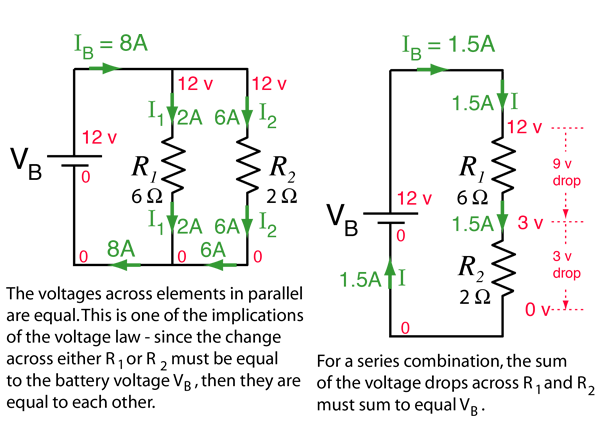
So the voltage drop across the each of the resistors is 10 volts. The voltage drop across all the resistors is the same and is equal to the dc source voltage. Each parallel wire has the same voltage as the entire circuit.
V drop i r where i current through the resistor in a ampere. By kirchoffs voltage law each resistor is now its own loop. The voltage across the left resistor is 6 volts and the voltage across the right resistor is 6 volts.
For the parallel circuit the voltage at one end of each of the resistors is 10 volts and the voltage at the other end of the resistor is at 0 volts. For example put 3 resistors in parallel with a 12v battery. Each loop includes the battery and the voltages add up to zero.
The voltage drop across resistors in parallel is always the same. V s is the source voltage measured in volts v r 1 is the resistance of the 1st resistor measured in ohms w. The formula for calculating the output voltage is based on ohms law and is shown below.
Also to get different values for like switches just use gnd as a start point and the end of each resistor and a end point. If you know the voltage across the whole circuit the answer is surprisingly easy. For a dc circuit with constant voltage source v t and resistors in series the voltage drop v i in resistor r i is given by the formula.
For this example the voltage drop is given v 5 a x 157 w 757 v. Then by applying ohms law the resistor will offer a voltage drop across a resistive device and it is given as. This equals the voltage drop across the entire parallel circuit and each resistor in the parallel circuit.
This way you get 3 switches from this each having different voltages sw1 3v sw2 6v sw3 9v so i hope someone can learn something from this. Voltage divider calculator calculates the voltage drops on each resistor load when connected in series. R 2 is the resistance of the 2nd resistor measured in ohms w.
Voltage drop of r2.

Ohm S Law Resistance And Simple Circuits Physics

Electrical Electronic Series Circuits
Potential Difference And Resistor Voltage Division

Correct Calculation For Voltage Drop Of Transistor
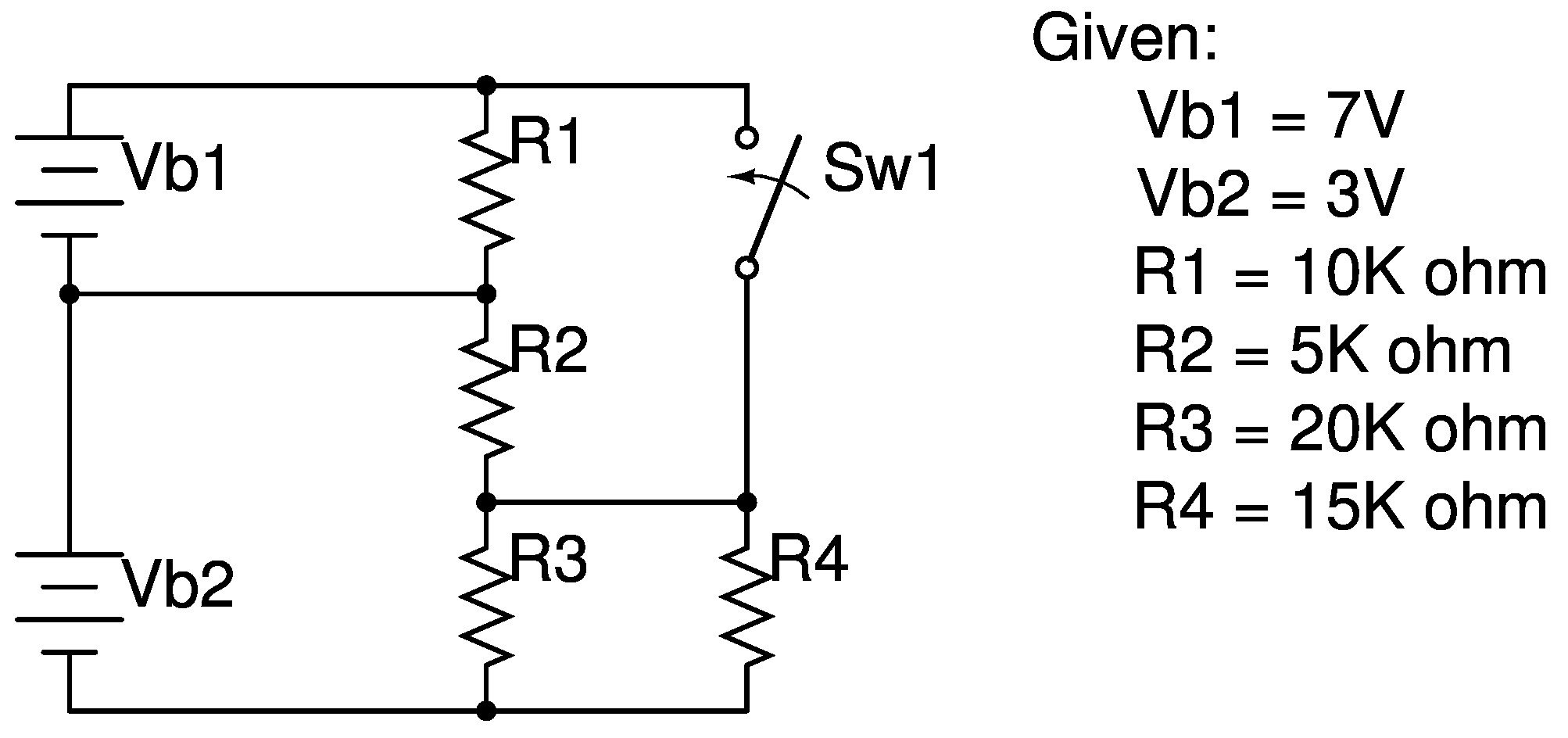
Basic Electronic Exercises Teach Me To Make

Voltage Divider Calculator

Led Resistor Calculator

Calculating Resistance Of Unknown Resistor Total Current
Ohm S Law

How To Calculate Voltage Across A Resistor With Pictures

Calculating Voltage Drop Across Resistors

Derivation For Voltage Across A Charging And Discharging
Comments
Post a Comment